Home EV Charger Installation: Power Your Electric Vehicle Safely
Electric vehicles save money on fuel and maintenance, but you need proper charging infrastructure at home. While you can plug into a standard outlet, this method charges slowly and limits your EV’s potential. A dedicated EV charger delivers faster charging, greater convenience, and safer operation. Here’s what you need to know about home installation.
Understand Charging Levels
Level 1 charging uses your standard 120-volt outlet and adds 3-5 miles of range per hour. This method works for plug-in hybrids or drivers with short commutes, but most EV owners need faster charging.
Level 2 charging operates on 240 volts—the same power your dryer uses—and adds 25-30 miles of range per hour. This charging level fully recharges most EVs overnight and suits typical driving patterns.
Most home installations use Level 2 chargers. They balance charging speed, installation cost, and electrical system requirements effectively.
Assess Your Electrical Panel Capacity
EV chargers draw significant power. A 40-amp Level 2 charger requires a dedicated 50-amp circuit. Your electrical panel must have capacity for this additional load.
Newer homes with 200-amp service typically accommodate EV chargers without upgrades. Older homes with 100-amp or smaller panels might need service upgrades before installation.
Licensed electricians calculate your home’s electrical load and determine whether your panel can support an EV charger. This assessment prevents overloading your system and ensures safe operation.
Choose Your Charger Location
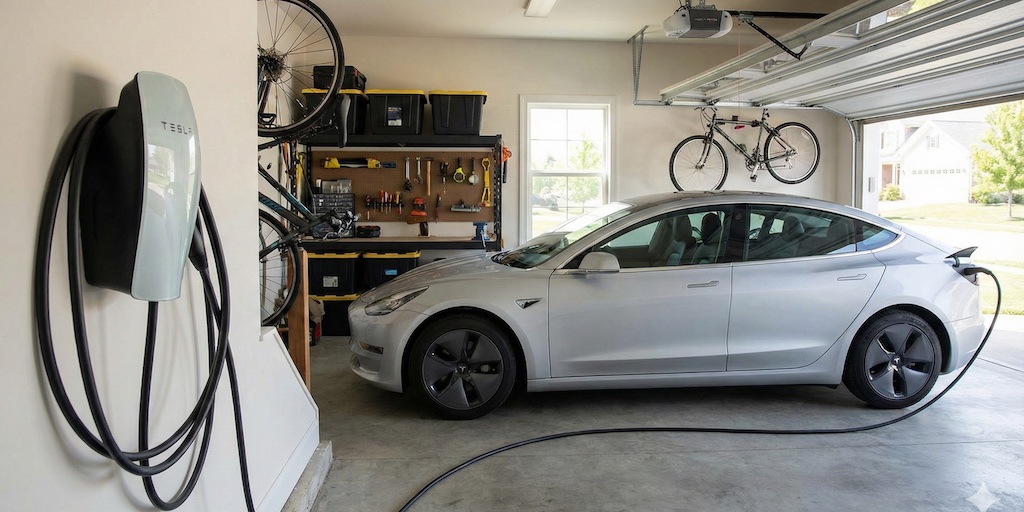
Install your charger near where you park. Indoor garage installations offer weather protection and convenience. Outdoor installations require weatherproof chargers rated for exterior use.
Consider cable length carefully. Most chargers include 18-25 foot cables, but you need enough length to reach your vehicle’s charging port from various parking positions.
The charger should mount on a wall near your electrical panel when possible. Shorter wire runs reduce installation costs and voltage drop.
Plan for Future Needs
Installing conduit during initial installation costs little extra but provides flexibility for future upgrades. You can easily pull larger wire through conduit if you buy a second EV or upgrade to a more powerful charger.
Some utilities offer lower electricity rates during off-peak hours. Smart chargers let you schedule charging to take advantage of these rates, reducing your operating costs significantly.
Wi-Fi enabled chargers track energy usage, schedule charging sessions, and send notifications to your phone. These features add convenience and help you monitor charging costs.
Navigate Permits and Incentives
Most municipalities require electrical permits for EV charger installation. Licensed electricians handle permit applications, inspections, and code compliance requirements.
Many states, utilities, and local governments offer rebates or tax credits for EV charger installation. These incentives offset installation costs substantially—some programs cover 50% or more of total expenses.
Your utility might require notification before you install high-load equipment. Some utilities offer special EV electricity rates that reduce your charging costs.
Professional Installation Matters
DIY EV charger installation creates serious safety risks. Improper wiring causes fires, damages your vehicle’s charging system, and voids warranties.
Licensed electricians ensure proper wire sizing, circuit protection, and grounding. We install chargers according to National Electrical Code requirements and manufacturer specifications.
Professional installation typically costs $500-2,000 depending on your electrical panel’s location, required upgrades, and charger placement. This investment protects your home, your vehicle, and your family’s safety.
A properly installed home EV charger delivers years of reliable service and convenient overnight charging.